 ElevateBoost







 Marvel Rivals
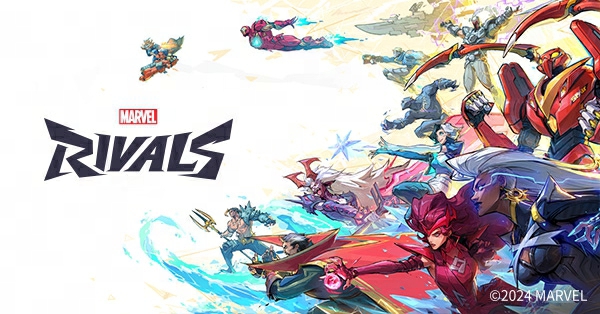
Every ranked duo, trio and Discord full-lobby lands on the same question: can you 6-stack in Marvel Rivals ranked? Short answer, yes — but only inside a specific band of ranks. This guide walks through every squad rule NetEase has locked into Competitive mode in 2026, tier by tier, so you know exactly what your friend list can and can't queue together.
Yes, You Can 6-Stack in Marvel Rivals Ranked — Under Two Conditions
The design intent behind Marvel Rivals ranked is clear: NetEase wants friends to climb together in the ladder's early stretch, then tightens the rules once the stakes rise. Below Grandmaster, a full six-player squad is legal in Competitive, provided every member falls inside the game's rank-spread limit. Above Grandmaster, that changes fast, and above Celestial the game removes squad play from Competitive altogether.
The Exact 6-Stack Rules by Rank Tier
Marvel Rivals splits Competitive into eight tiers: Bronze, Silver, Gold, Platinum, Diamond, Grandmaster, Celestial, Eternity and One Above All. Each tier has three divisions except the top two. Group-size limits kick in tier by tier — not division by division — so a Grandmaster III player follows the same squad rule as a Grandmaster I.
Bronze through Diamond I — 6-Stack Allowed
From Bronze III up through Diamond I, you can queue as any group size from 2 to 6. This is where the vast majority of the playerbase sits and where friend groups can actually roll ten ranked games in an evening. The only cap that applies here is the rank spread inside the squad.
Grandmaster III through Celestial III — Trios and Duos
Grandmaster is the first hard gate. Once anyone in the squad hits Grandmaster III, the group is capped to trios in Grandmaster, then duos as you cross into Celestial. Four-, five- and six-stacks are locked out of matchmaking entirely — the queue button greys out and the client tells you the group is too large for the highest-ranked member's tier.
Eternity and One Above All — Solo Queue Only
At Eternity I and above, the game switches to strict solo queue. This is where tournament stacks, top-500 climbers and pro coaches play, and NetEase enforces the rule because integrity matters more than social flexibility. Two friends who both reach Eternity can no longer duo in ranked at all — they either play Quick Play together, or one plays outside their peak rank.
Squad Size vs Rank at a Glance
- Bronze III → Diamond I: 2-, 3-, 4-, 5- or 6-stack allowed
- Diamond I → Grandmaster III: 6-stack allowed until anyone crosses Grandmaster III
- Grandmaster III → Grandmaster I: trios only
- Celestial III → Celestial I: duos only
- Eternity → One Above All: solo queue only
- Rank spread inside a squad: capped at three full tiers between highest and lowest member
The Rank-Spread Rule Inside a 6-Stack
Even inside the '6-stack allowed' zone, Marvel Rivals limits how far apart squad members can rank. The current rule caps the gap at three full tiers between the highest- and lowest-ranked player. A Bronze I and a Platinum III can queue together; a Bronze I and a Diamond III cannot. When the spread breaks the rule, the queue button disables and the client explains the exact spread limit — so you don't need to guess what's wrong.
Why NetEase Caps Squad Size at High Ranks
A coordinated six-stack has an outsized advantage over six solo queuers: shared comms, pre-planned team-ups and no synergy misses. In Grandmaster and above, the game asks the matchmaker to find another six-stack of comparable skill to keep the match fair — and that queue rarely exists at 3 a.m. on a weekday. Rather than force 20-minute queues or badly balanced matches, NetEase caps group size instead. It's the same logic Overwatch 2 used before rolling back its Wide Queue experiment.
6-Stack Tips That Actually Move the Needle
Force a Real Team Composition
Random ranked lobbies default to a 2-2-2 (two Vanguards, two Duelists, two Strategists). A six-stack has zero excuse for role-scattering. If your comp is 1-4-1 you'll bleed matches to enemies who lock in a real front line. Pick roles before you queue, not in the character select screen — and swap the callout of who plays flex based on the map, not the loudest voice in Discord.
Use Voice, Not Text
Marvel Rivals' ping wheel is strong, but it isn't enough at Diamond+. A single Strategist who calls 'no cooldowns, dive now' saves teamfights the pings can't. Discord is faster and cleaner than in-game voice, but either beats typing. Split your comms channel: one line for shot-calling, one line for banter, so a call doesn't get buried.
Cover the Team-Up Matrix
Every Duelist has at least one team-up partner. Iron Man plus Hulk unlocks Gamma Charge, Rocket plus Punisher unlocks Ammo Overload, Thor with Storm and Captain America unlocks Ragnarok. A six-stack that ignores team-ups is playing a version of the game with two fewer buttons than the enemy. Build the comp around a chain of stacked team-ups, and prioritize the ones that give both heroes the buff — one-way team-ups are a distant second choice.
Common Mistakes 6-Stacks Make
- Locking the same Duelist role three times because 'we're all good on Duelists' — the front line still crumbles
- Ignoring counterswaps because voice chat prizes ego over adaptation
- Queuing at a rank spread near the three-tier cap, which slows matchmaking to a crawl
- Playing off-meta heroes into a proven meta comp because it's 'more fun in a stack'
- Forgetting that the enemy six-stack also has voice comms — treat every ranked six-stack as an equal until you see otherwise
- Blaming the flex when the shot-caller changed the plan mid-teamfight
Is 6-Stacking Actually Better Than Solo Queue?
For most players, yes — up to Diamond. Coordinated healing, target-calling and Ultimate combos win close games that solo queue can't. The exception: a five-friend, one-random compromise squad tends to underperform both a full stack and a full solo lobby, because the random plays a role nobody planned for and can't be told to swap. If one of your six drops, either sub in another friend or drop back to a five-stack.
6-Stacks and Chrono Shield Points
A 6-stack lives under the same Chrono Shield rules as solos: three shield points per player, one consumed on a loss to protect your rank, refills over time based on wins. Chrono Shield is per player, not per squad, so every teammate has their own reserve. Your win rate as a stack matters more than any single loss — three shield points won't save a group that plays fifteen bad games in a row.
Console vs PC 6-Stack
Cross-play in Marvel Rivals is on by default in Competitive, which means a mixed PC and console six-stack is fine mechanically. The catch is aim assist: console players get generous aim assist on controller, PC players on mouse and keyboard get none. Mixed squads climb faster when the PC players are on a hitscan role like Punisher or Hela and consoles cover brawl characters and Strategists, where aim assist matters most.
6-Stack vs Getting There the Fast Way
A six-stack is powerful up to Diamond and brutal from Grandmaster. If the goal is to get every member of the stack to Grandmaster before Season 10 rewards lock, and one of you is bottlenecking the group at Platinum while the rest sit at Diamond, the three-tier spread rule can trap the whole squad. A one-time push on the lowest-ranked member — either through solo grinding or a targeted Marvel Rivals rank boost — closes the gap without breaking the squad up for weeks.
Frequently Asked Questions
FAQ
Can you 6-stack in Marvel Rivals ranked?
What is the rank spread limit for a 6-stack in Marvel Rivals?
Can you 6-stack at Grandmaster in Marvel Rivals?
Is ranked crossplay in Marvel Rivals? Can a PC and console 6-stack queue together?
Does a 6-stack lose more points on a loss than a solo player?
How do ranked rewards work for a 6-stack across different ranks?
Source: Marvel Rivals — official game information. Squad-size caps are set by NetEase inside the Competitive matchmaker and are known to shift a division either way between seasons — always check the queue screen for the current cap.